

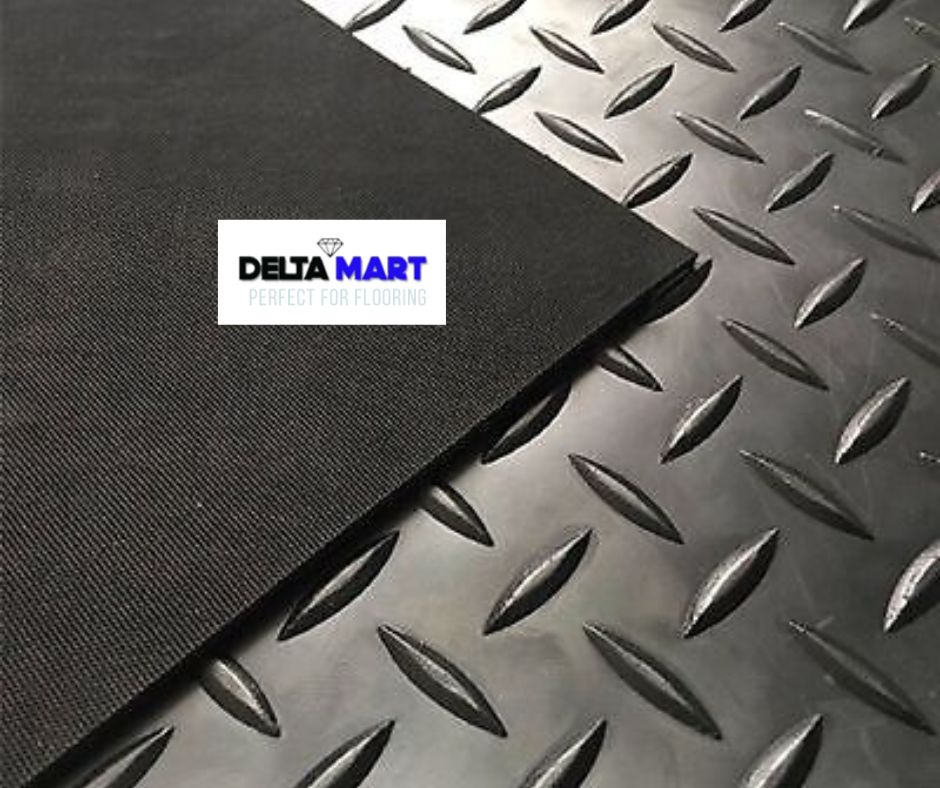
A garage floor has to cope with wet cars, grit, the odd oil drip and whatever else gets stored around the edges. Talk of garage rubber flooring can mean two quite different projects: covering the slab wall to wall, or placing individual mats where you stand, work or park. Both can be sensible. They solve different problems and they ask different things of your budget, your door clearance and your appetite for laying work.
This guide is for household garages and similar domestic workshops. It is not a finish specification for a public workshop or MOT bay.
What you are trying to achieve
Write down the real job before you order:
- Keep kneelers and tools off cold, dusty concrete
- Catch drips under a car or mower
- Make a cleaner path from the car door to the house
- Cover stained concrete you are tired of looking at
- Create a flexible space that is sometimes parking and sometimes DIY
Full cover is better at hiding stained concrete and at stopping grit migrating everywhere. Individual mats are better if you still park a dripping car in the middle and want to lift, hose and replace sections easily.
Many garages do well with a hybrid: a run of matting where people walk and work, and bare slab or a simpler finish under the car.
The case for covering the whole floor
A continuous floor feels finished. It reduces dust, is kinder underfoot and can make a gloomy garage easier to keep tidy. Many people use rubber flooring rolls for this because they cover long, rectangular spaces with fewer joins than a patchwork of small mats.
Full cover needs a cleaner, drier slab. Any moisture, oil or hollow will be sealed under a large area of rubber that you will not want to lift every week. Measure door clearance carefully. Sectional and up-and-over doors have little patience for a floor that has suddenly grown thicker.
Joins should fall away from the main vehicle path if you can arrange it, and edges at the door need to sit flat so they are not kicked up by a tyre.
If you like the look of a complete floor but want to see how other household ranges approach the same job, compare garage floor mats as well as rolls before you decide.
The case for individual mats
Individual mats go where the work is: in front of the bench, under the most likely drip point, inside the pedestrian door, or as a kneeling pad beside a bike stand. They cost less to start with and they are easy to take outside and wash.
They will not make a stained slab disappear, and they can wander if they are too small or too light. On a smooth painted floor, choose heavier pieces or a backing that stays put.
A single large mat under the engine bay of a parked car can catch drips, but only if you position it where the car actually sits. Mark the tyre positions on a quiet day and then place the mat; guessing usually puts it a foot too far forward.
Heavier pieces sold as garage rubber flooring style mats are useful here because they stay where you put them and can be lifted one at a time after a wet week.
Preparing the slab either way
Sweep and degrease. Oil left on the concrete will transfer and can affect some rubber compounds; check product guidance if the garage is more workshop than parking bay. Fill dangerous holes and note any damp after a wet night with the door closed.
Do not cover a slab that is obviously wet in the hope that rubber will dry it out. Improve ventilation and deal with leaks around the door first.
If you are using rolls, acclimatise them in the garage so they are not stiff from transport. Dry-lay before you cut. Other rubber flooring rolls follow the same measuring logic: length of the room, obstacles, and a plan for the cut at the door.
Oil, damp and winter
Household garages see road wet more than industrial oil, but lawnmowers and topping-up jobs still spill. Wipe spills rather than leaving them to sit. Some compounds cope better with oil than others; treat that as a specification check, not a promise that every black mat is oil-proof.
In winter, rubber stiffens and wet cars bring in salt and slush. Individual mats can be taken out and hosed. A full floor needs sweeping so salt grit does not sit in the texture. Leave drainage routes at the door clear.
Compare heavy duty rubber mats if part of the garage is really a workbay and needs a tougher standing patch than the area where you walk to the house.
Cleaning and rearranging
Sweep grit; it is abrasive under shoes and tyres. Lift individual mats and clean beneath. For a full floor, mop with a mild cleaner and avoid flooding the edges. If a section is damaged, a tiled or individual-mat layout is easier to repair than a single welded-looking run of roll — unless you left spare roll from the same batch.
Common mistakes
- Ordering wall-to-wall covering before checking the door still closes
- Laying over oil and damp "to hide it"
- Using lots of tiny mats that skate in different directions
- Putting one drip mat where the car never actually leaks
- Forgetting you still need to get a wheelbarrow or bin through the space
Choose full garage rubber flooring when you want a finished, easier-to-sweep room and the slab is ready for it. Choose individual mats when you want targeted protection you can lift and wash. A hybrid layout is not a compromise; for many UK household garages it is the arrangement that still works in February.