

By January, the horse walker on many yards has turned into something nobody wants to lead a horse onto. The track is churned, puddles sit in the low spots and the surface that looked fine in August now sucks at hooves on every lap. Horse walker mats are one of the most effective ways to break that cycle, but they work best when the whole project is planned, from the base upwards.
Whether you are building a new walker or resurfacing an old one, this guide covers what to think about before you order.
Common horse walker surfaces and their winter problems
Most walkers start life with a loose surface: sand, woodchip, rubber crumb or a mix. These can be pleasant to work on when dry, but each has a weakness in a wet British winter.
Sand holds water and can become heavy and deep, or it migrates to the outer edge of the track as horses walk. Woodchip breaks down over time and turns into a soggy mulch. Loose rubber crumb can drift and needs regular topping up and levelling. Bare concrete, at the other extreme, is hard and becomes slippery when wet.
The common thread is maintenance. Loose surfaces need constant raking, levelling and replacement, and in very wet spells they can become unusable just when horses on box rest or limited turnout need the walker most.
What to look for in horse walker mats: grip, drainage, thickness
Purpose-made horse walker mats are designed to give a consistent surface lap after lap. When comparing options, focus on three things.
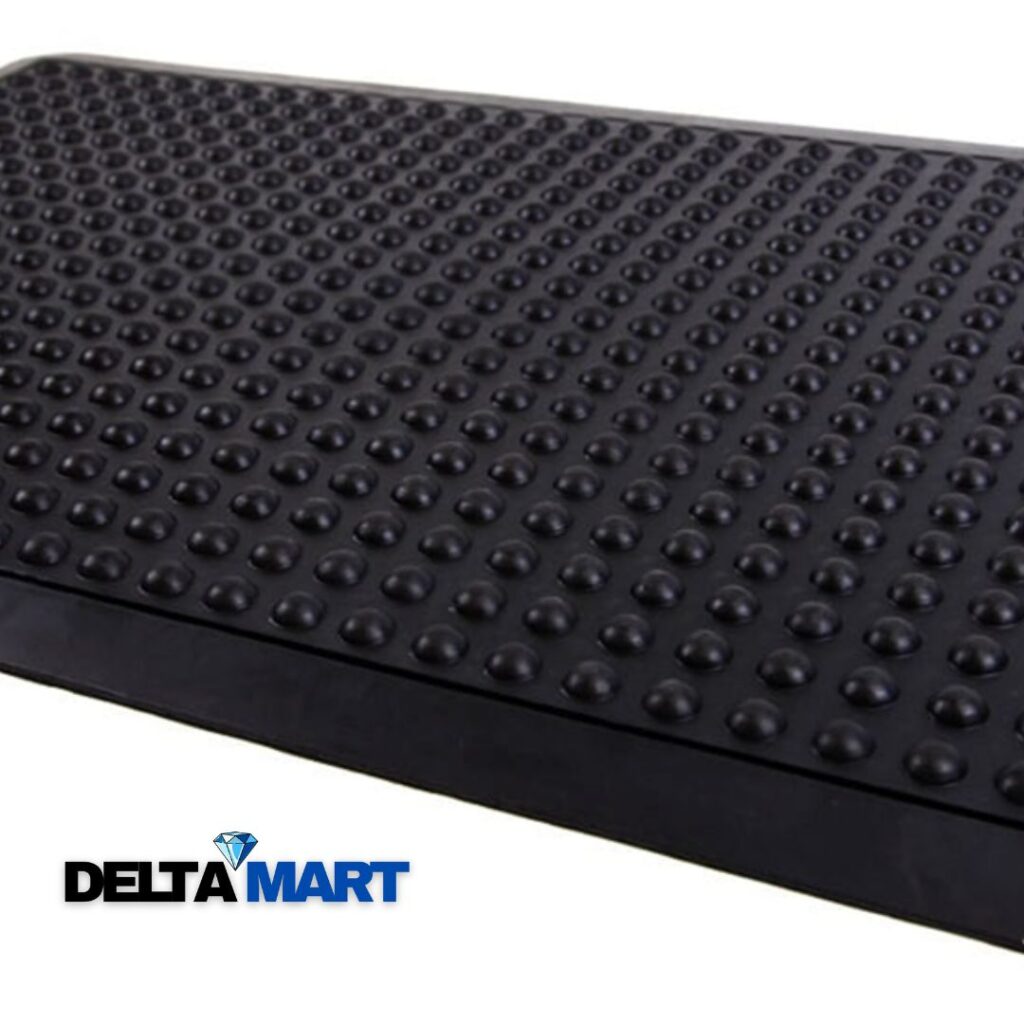
Grip comes first. Horses walk in a constant curve, often at a brisk pace, so the surface must offer reliable traction in wet and muddy conditions. A textured or patterned top helps hooves grip without being so aggressive that it causes jarring.
Drainage is next. Water needs somewhere to go, whether that is through holes in the mat, across the surface towards the edge or down into a free-draining base. Standing water on a walker quickly turns to mud.
Thickness and density matter for comfort and longevity. A mat that is too thin may move or wear quickly, while one that is too soft can feel unstable. Check each product’s intended use and ask questions if you are not sure it suits a walker. For a broader look at equestrian rubber flooring, Delta Rubber Imports has a range worth comparing.
Preparing the track base
The base is where most walker projects succeed or fail. Mats need a firm, level, well-drained surface beneath them. On a new build, that usually means excavating the track, laying a compacted sub-base and ensuring the levels allow water to run off or soak away.
On an existing walker, remove the old loose surface and check what lies beneath. Soft spots, hollows and areas where water pools should be dug out and rebuilt. It is tempting to lay mats straight over a tired base and hope for the best, but mats will follow every dip and bump below them, and water trapped underneath can undermine the whole surface.
If you are not confident about levels and drainage, a local groundworks contractor with equestrian experience can save you a lot of trouble.
Fitting around curves and the track edge
A walker track is a circle, which brings its own fitting challenges. Mats laid around a curve leave tapered gaps on the outer edge, so plan your layout carefully. Some owners cut mats into gentle wedges; others use smaller units that follow the curve more easily. Products such as interlocking rubber mats can make it easier to build a continuous surface that follows the shape.
Pay attention to the inner and outer edges. Mats should be secured so they cannot shift as horses walk, and the edge of the track should be finished neatly, with no lips or gaps where a hoof could catch. Talk to your walker manufacturer if you are unsure how matting will interact with the fences or panels.
Muck removal and winter maintenance
One of the big advantages of matting is easier mucking out. Droppings can be picked up with a shovel or scraped off, rather than raked out of a deep loose surface. Do this daily to keep the surface clean and grippy.
Through winter, keep an eye on drainage. Clear any blocked outlets, sweep leaves and debris off the track and check for areas where water is collecting. If ice forms, follow your normal yard procedure for frosty conditions rather than risk working horses on a slippery surface.
Periodically check fixings and joins. If a mat starts to lift or move, deal with it straight away. A small problem caught early is far easier to put right than a whole section that has worked loose.
Approaches and gateways: stopping mud at the entrance
Even a perfectly matted walker will suffer if horses arrive covered in mud from the yard. The entrance and the route to it deserve as much thought as the track itself.
Consider extending matting to the gateway and approach path. exterior rubber flooring can cover these high-traffic spots, while mud mats for horses help in the area where horses wait or are tacked up.
If you have a long approach to cover, Delta Rubber Imports also supplies external rubber matting, which is worth comparing before you decide how far to extend the matting.
Keeping the entrance firm and clean means less mud carried onto the track, less wear on the mats and an altogether more pleasant walk for horse and handler.
Planning your walker for winter
Horse walker mats turn a high-maintenance loose surface into something far more consistent and manageable. Start with a sound, well-drained base, choose mats with good grip and drainage, plan carefully around the curve and give the approach the same attention as the track.
If you are planning a walker project this season, browse the equestrian range at Delta Mart. Delta Mart keeps prices fair and rubber tough, and we deliver quickly across the UK, so your horses can get back to walking on firm footing sooner.