

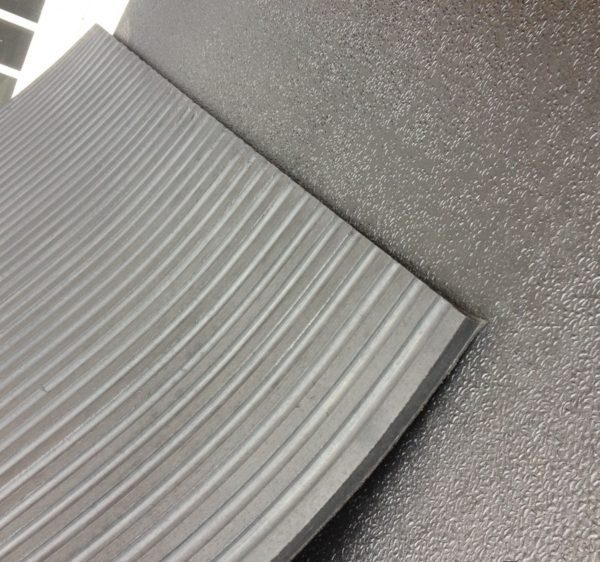
There is a persistent myth on some yards that once the stable is matted, bedding becomes optional. It is easy to see why. Rubber stable flooring is comfortable, cushioned and much warmer than bare concrete. But mats and bedding do different jobs, and the healthiest stables use the two together.
Getting the balance right keeps your horse comfortable and your mucking out manageable. Below, we look at what each part of the system does and how to make them work together.
What rubber stable flooring does (and doesn’t) replace
Rubber mats give a level, cushioned, non-slip base over hard concrete. They help reduce the jarring of standing on a hard floor, insulate against cold coming up from the ground and give horses more confidence when getting up and lying down.
What mats do not do is absorb urine. Rubber is non-absorbent, so without bedding, urine pools on the surface and runs to the edges or the drain. Horses also need something to encourage them to lie down and rest. That is why mats are best thought of as replacing a deep bed’s cushioning layer, not the bedding altogether.
The practical result is that you can usually use less bedding than you would on bare concrete, which can mean less waste to deal with and quicker mucking out.
Pairing mats with shavings, straw, pellets or paper
Each type of bedding behaves a little differently on mats.
Shavings are probably the most common partner for rubber. They absorb well, are easy to pick through, and a moderate layer sits comfortably on top of the mat.
Straw is warm and traditional, and horses often like it. On mats it can slide around a bit more, and it is less absorbent, so you may need to manage wet patches more closely.
Wood pellets expand when wet and break down into an absorbent, sawdust-like layer. They work well with mats because the base layer absorbs urine efficiently, leaving less to soak towards the edges.
Shredded paper or cardboard can be useful for horses with dust allergies or respiratory sensitivities. It is absorbent but can become heavy when wet.
Whichever you choose, the mat underneath stays the same. Our rubber stable flooring pages are a good place to see what is available if you are still deciding on the base.
How much bedding to keep on top and why
There is no single correct depth, because every horse and every stable is different. As a starting point, keep enough bedding to absorb urine fully, cover the mat so the horse is encouraged to lie down and bank the edges slightly to reduce the risk of the horse getting cast.
Horses that spend long hours stabled, or older horses that lie down more, may benefit from a deeper bed. Horses that are out most of the day may need less. Watch your horse: if they are reluctant to lie down or have wet patches on their coat in the morning, the bed may need adjusting.
Mucking out on mats: daily and weekly routine
Mats make mucking out quicker, but a good routine still matters.
Each day, remove droppings and wet patches, pull clean bedding back from the edges and spread it over the floor. Top up as needed. Leave the floor to air for a while when the horse is out if you can.
Each week, or whenever it suits your routine, remove more of the bedding and sweep the mats clean. Look along the joins and edges for wet patches, and every so often lift a mat at the edge to check that urine is not collecting underneath. If it is, take the time to lift, clean and dry the floor before relaying.
Wall padding and checker mats for problem stables
Some stables need a little extra help. Horses that roll, kick out or regularly get cast benefit from stable wall padding on the lower walls, which cushions knocks and can help a horse push off when getting up.
For particularly busy areas, such as the doorway or a stall where a horse paws, a heavy checker rubber flooring adds tough grip where wear is highest. Delta Rubber Imports also offers rubber stable mats, which may be useful if you are comparing thicknesses for a whole block.
In tack rooms, feed rooms or along aisles, ribbed rubber flooring rolls can provide an easy-clean surface that is simple to sweep.
Signs your stable floor needs attention
Watch for these warning signs:
- Mats that have moved, leaving gaps between them
- Persistent smells, even after mucking out
- Wet patches that keep reappearing in the same place
- Mats that have curled, cracked or worn smooth
- A horse that seems reluctant to lie down or slips when getting up
Most of these can be put right by lifting, cleaning and relaying the mats or replacing a worn one. Catching problems early stops them affecting your horse’s comfort or health. If a mat is genuinely past its best, Delta Rubber Imports’ range of rubber flooring mats is worth comparing when you look for a replacement.
Getting the combination right
Rubber stable flooring and bedding work best as a team. The mat provides a cushioned, insulated, non-slip base, and the bedding absorbs urine and encourages your horse to rest. Get the depth right, keep up a sensible mucking out routine and check under the mats from time to time.
Ready to upgrade your stable floor? Explore the stable range at Delta Mart. We offer hard-wearing mats at down-to-earth prices, sent quickly to yards all over the UK, so your horse can settle on a better floor sooner.