

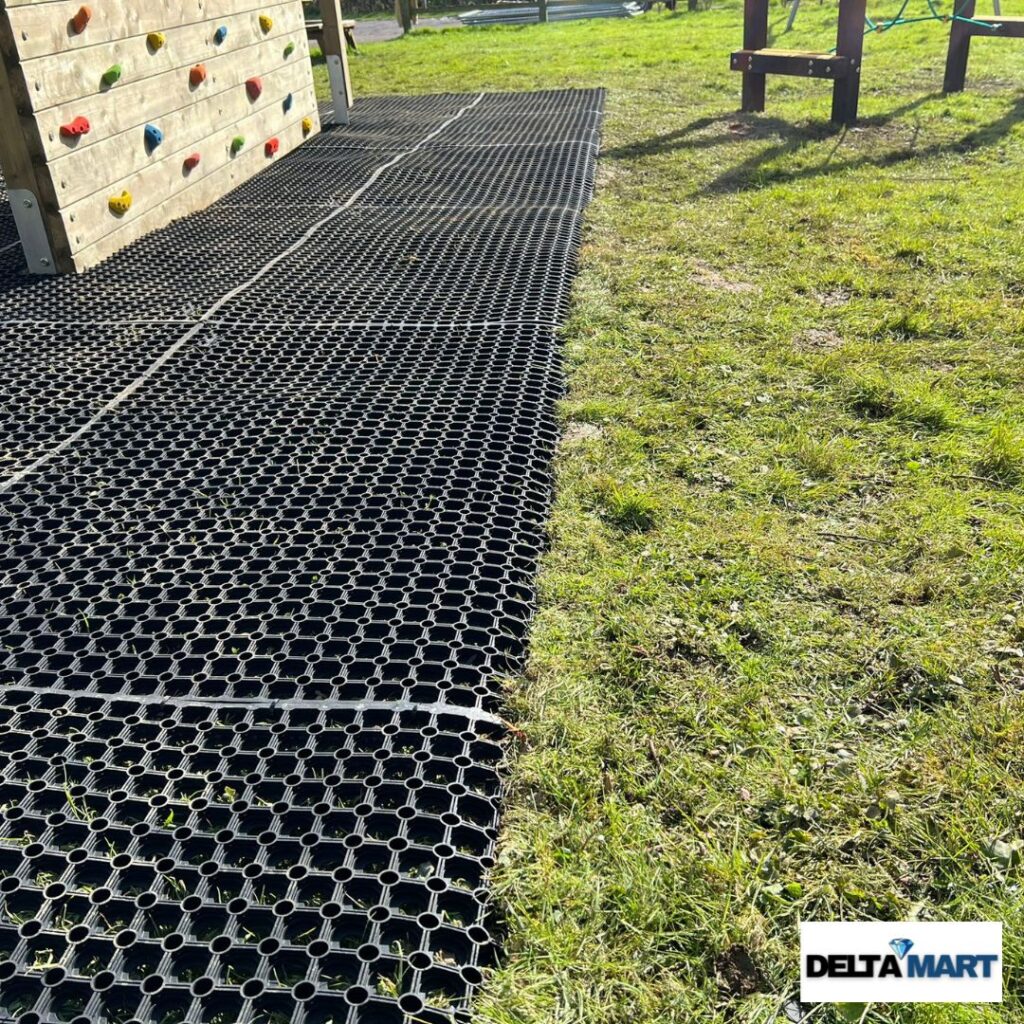
The climbing frame arrived in a flat-pack the size of a small car, and after a long Saturday with an Allen key it finally stands in the garden. Before the children charge up the ladder, it is worth thinking about what lies underneath. Grass mats for playgrounds and rubber safety tiles are two simple ways to make a home play area more forgiving, and neither needs a professional installer.
If you are a parent, grandparent or home childminder setting up swings, slides or a climbing frame, the steps below will help you plan the space sensibly.
Assessing the play area: equipment, heights and ground
Start with the equipment. Look at the manufacturer’s instructions, which often include guidance on safe spacing and suitable surfacing. Note the height of platforms, the top of the slide and the highest point a child could climb to. Taller equipment generally calls for more protective surfacing.
Next, look at the ground. A lush, level lawn is a reasonable starting point. Hard patio, decking, gravel or compacted earth are not ideal under climbing equipment. Check the slope too: a level site is safer and makes it easier to secure both equipment and mats.
Finally, think about how the space will be used. Will toddlers potter around a small slide, or will older children be swinging high and jumping off? The answer shapes what kind of protection you need.
It is also worth thinking about where you will be when the children are playing. A play area that can be seen from the kitchen window or the patio is easier to supervise, and moving the equipment a few metres now is much easier than relocating it, and its surfacing, later.
Grass mats vs rubber safety tiles for home gardens
Grass mats are open rubber grids laid on top of the lawn. Grass grows through the holes, so the play area stays green, while the rubber protects the turf from wear and adds some cushioning. They are a popular choice for home gardens because they blend in and are easy to lay. Our grass mats for playgrounds are designed for this sort of use.
Rubber safety tiles are solid, thicker tiles that create a defined play surface. They are better suited to higher equipment or areas where grass has already worn away. They also give a clean, all-weather surface. You can compare playground safety mats in our range, and Delta Rubber Imports lists playground safety mats if you want a wider choice.
For many gardens, a mix works well: tiles in the highest-traffic spots, such as under swings and the end of the slide, and grass mats around the rest.
How far around equipment to cover
The surfacing should extend beyond the footprint of the equipment itself, because children do not fall straight down. They jump, slide off the end and swing forward and back. The area needed varies with the type and height of equipment, so check the manufacturer’s guidance first.
As a practical approach, cover the whole area under the equipment, then extend coverage in front of and behind swings to allow for their full arc, and in front of the slide exit for children landing at the bottom. Around climbing frames, leave space on all sides where children might jump or step off. If in doubt, cover a little more rather than less. Keep the covered zone clear of hard edges too, such as raised beds, paving kerbs and garden furniture, so a child who tumbles beyond the mats is not landing on something solid.
Laying grass mats for playgrounds on lawn: a weekend project
Laying grass mats is a satisfying weekend job. Here is the usual process:
- Mow the lawn short and remove any stones, sticks and debris
- Top-dress any hollows with soil and tread it level
- Lay the mats flat, with the holes facing up
- Join mats together with the connectors provided
- Peg them down securely, paying attention to edges and corners
- Water the area in dry weather to help grass grow through
Within a few weeks, grass should start to come up through the openings. Keep heavy use light at first if you can. For a wider comparison of grass mats for play areas, Delta Rubber Imports also stocks a similar product.
Indoor play corners with foam mats
Not all play happens outside. For a playroom, bedroom corner or conservatory, interlocking foam tiles give a soft, warm surface for crawling, building and rough-and-tumble games. They lift easily for cleaning and can be packed away whenever you want the floor back.
Our foam tiles are listed under childrens play mats foam, and Delta Rubber Imports’ interlocking foam mats offer another option in a similar interlocking format. Keep foam indoors, as it is not designed for outdoor play equipment.
Checks to do each season
Like any outdoor kit, play surfacing benefits from a quick look now and then:
- Spring: re-peg any mats lifted by frost and reseed bare patches
- Summer: water the lawn in dry spells so grass keeps growing through
- Autumn: clear leaves that can make mats slippery and hide damage
- Winter: check equipment and mats after storms and heavy rain
At any time of year, look for raised edges, loose pegs and splits, and fix them before they cause trips.
A safer garden for play
A little planning makes a home play area much more forgiving. Check your equipment’s guidance, cover generously around swings and slides, and choose grass mats for playgrounds, rubber tiles or a mix depending on height and use.
Browse the play and outdoor range at Delta Mart to plan your garden play area. Delta Mart offers durable, affordable surfacing with quick UK delivery, so it can be down before the children are let loose on the climbing frame.