

Worn grass rarely fails all at once. It starts with a faint track where people cut the corner, a scuffed patch by the shed or a muddy smear in the gateway. Left alone, those patches spread. Grass protection mesh and rubber grass mats both aim to stop that happening, but they work in quite different ways, and the right choice depends on what is wearing your grass out.
Here is a side-by-side look to help gardeners, smallholders and caravan and campsite owners decide.
The problem: worn paths, muddy gateways and bald patches
Grass struggles when it is walked or driven over repeatedly in the same place. Traffic compacts the soil, squeezes out air and crushes the growing point at the base of each plant. In wet weather, the soil turns to mud and the turf breaks apart.
The most common trouble spots are predictable: garden paths that follow a natural shortcut, gateways where animals or people gather, pitch areas on campsites, the route to the washing line or bins, and spots where cars or trailers occasionally park. Each of these needs reinforcement, but not necessarily the same kind.
Before choosing, it helps to be clear about the cause. Is the wear from feet, wheels or hooves? Is it constant, seasonal or only on busy weekends? Is the area still green, or already bare soil? Your answers point fairly clearly towards one product or the other.
How grass protection mesh works
grass protection mesh is a flexible plastic net laid directly onto the grass and pinned down. The grass grows up through the holes and, over a few weeks, the mesh becomes embedded in the turf.
Once established, the mesh reinforces the top layer of soil and protects the grass’s growing point. It spreads load from feet, wheels and hooves and helps stop the surface breaking up into mud. Because it sits low and becomes almost invisible, it keeps a natural look.
Mesh is generally best for areas with light to moderate traffic that are worn but not yet destroyed. It is quick to lay over large areas, and you can mow over it once the grass has knitted through.
How rubber grass mats work
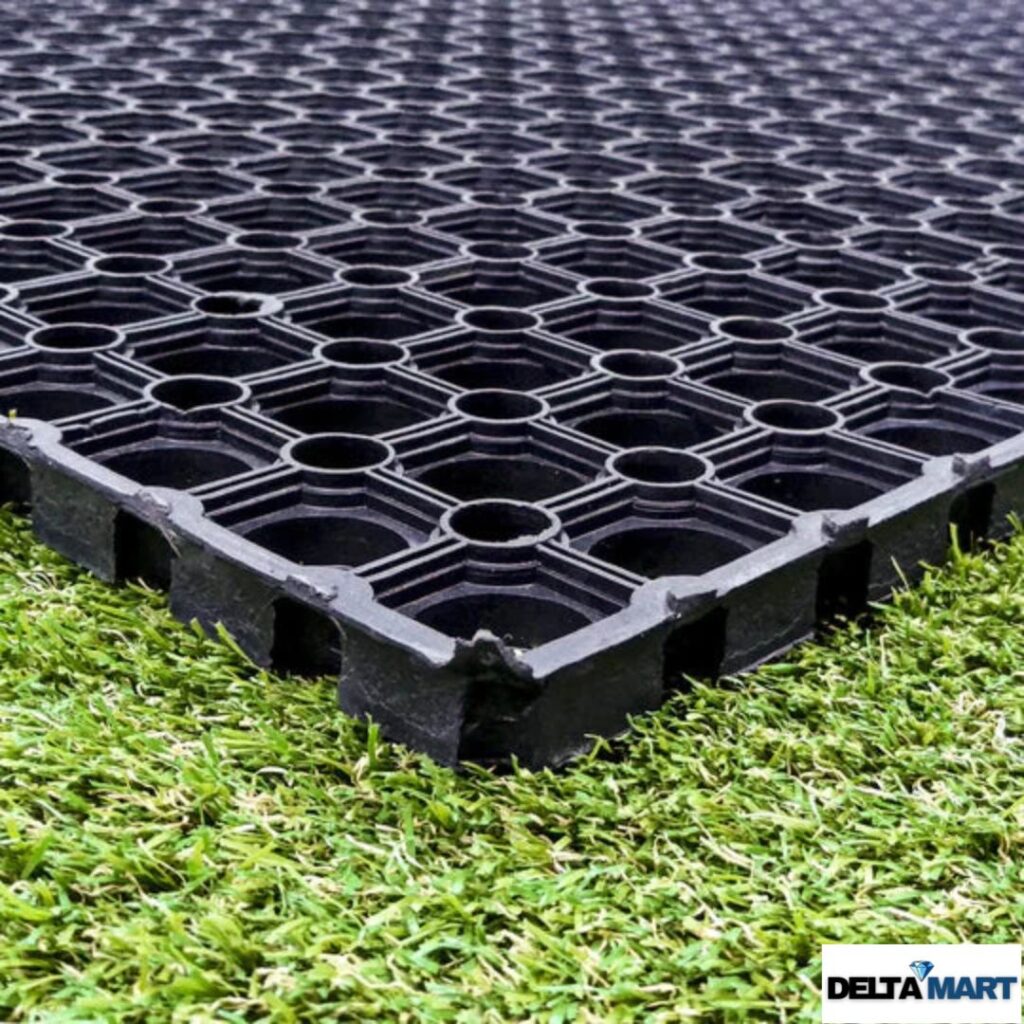
Rubber grass mats are thicker, heavier mats with a grid of openings. They are laid on top of the grass, and turf grows up through the holes.
They offer more cushioning and spread loads more widely than mesh, which makes them better suited to heavier or more concentrated use. They are often used under play equipment, on busier paths and in places where occasional vehicles park. Their weight helps them stay put, and they can be lifted and moved more easily than embedded mesh.
If you are comparing products, Delta Rubber Imports offers a grass protection mesh option among its rubber grass mats, and its wider outdoor rubber matting range is useful for areas that need more substantial cover.
Side-by-side: load, comfort underfoot, look and cost factors
Load. Mesh is designed for lighter traffic such as footpaths and occasional use. Rubber mats cope with heavier footfall and more concentrated loads.
Comfort. Mesh is barely noticeable underfoot once grass has grown through. Rubber mats feel firmer but also cushion impacts, which is why they are popular under swings and climbing frames.
Look. Both allow grass to grow through. Mesh tends to disappear more completely; rubber mats may remain slightly visible, especially in dry spells.
Cost factors. Rather than quoting prices, it is more useful to think about what drives cost: the size of area you need to cover, how long you need protection to last, whether you will want to lift and reuse the product and how much preparation the ground needs. Mesh often covers large areas economically, while mats offer more protection per square metre.
For hard-wearing areas that do not need grass, exterior rubber flooring or recycled rubber mats may be a better fit altogether.
Best time of year to lay grass protection mesh and mats in the UK
Both products depend on grass growing through them, so timing matters. Spring and early autumn are usually best in the UK, when the soil is warm and moist and the grass is actively growing.
Avoid laying in very dry summer spells, when grass struggles to grow, or in deep winter, when growth all but stops and ground may be waterlogged or frozen. If you have to lay outside these windows, keep traffic off the area for longer and water in dry weather.
Installation and aftercare tips
Preparation is similar for both. Mow the area short, remove stones and debris and fill any ruts or hollows with topsoil. Lay the product flat with no ripples and pin it securely, especially along edges and joins.
Keep heavy traffic off for a few weeks while grass establishes. Once it has grown through, mow regularly with blades set a little higher than usual. Check pins after frost or heavy rain and re-secure any lifting edges.
For areas around the garden that need non-grass solutions, Delta Rubber Imports’ range of rubber mats is another place to look.
Choosing between mesh and mats
Grass protection mesh is a discreet, cost-effective way to reinforce lawns, paths and gateways with light to moderate traffic. Rubber grass mats offer more cushioning and strength for busier areas, play spaces and occasional parking. Many gardens and sites end up using both.
Explore the grass and ground protection range at Delta Mart to find the right solution. Delta Mart combines hard-wearing products with pocket-friendly prices and quick UK delivery, so you can lay before the next growing window closes.