

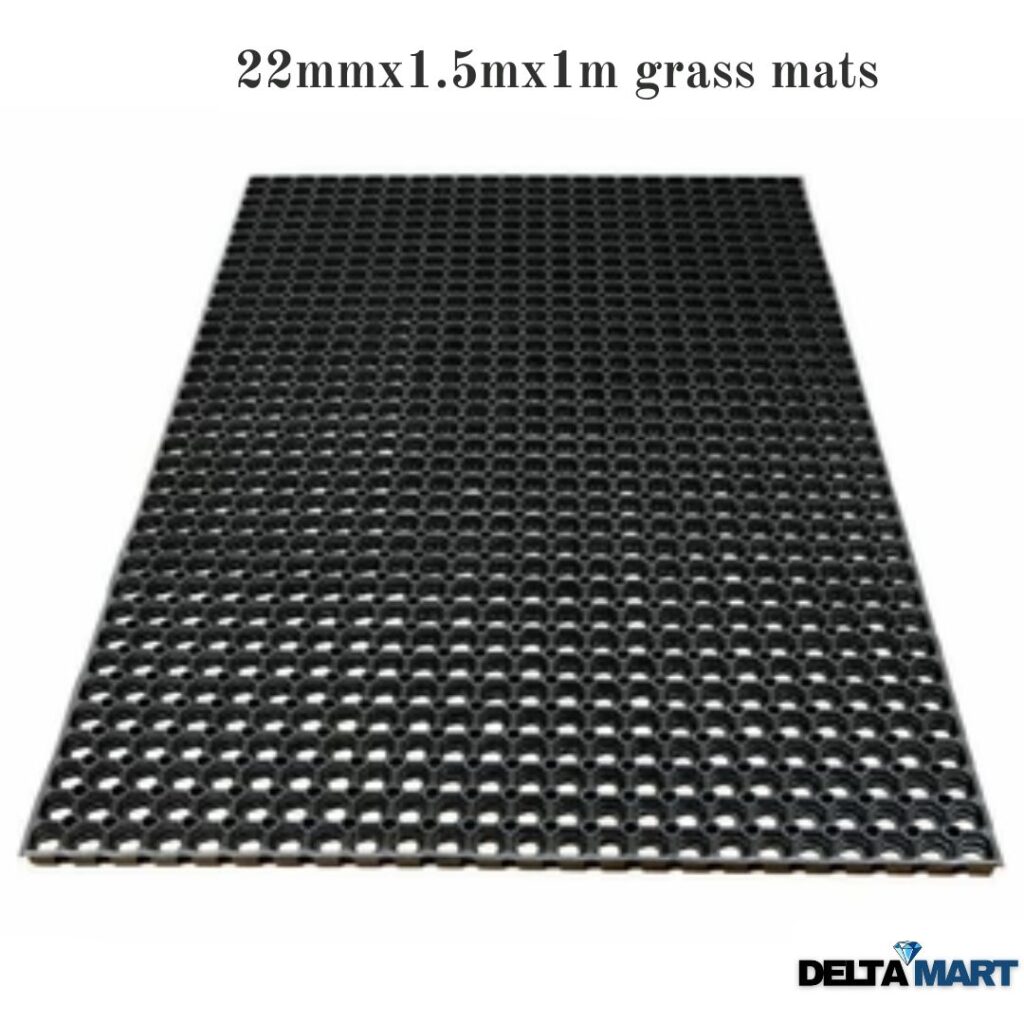
The first properly mild weekend of the year has a way of revealing everything winter did to the garden. Bald patches under the swing, a muddy track to the compost bin, a shed floor that has gone soft in one corner. Spring is the moment to fix all of it, and rubber garden mats can solve a surprising number of these jobs. They are not the answer to everything, though, and knowing where they do not belong matters just as much.
Here is a practical tour of the garden, job by job.
Spring is the right time to fix winter wear
Grass grows strongly in spring, the ground is workable and the weather is kind enough for outdoor projects. Any matting that relies on grass growing through it, such as open-grid mats, will knit in quickly at this time of year.
It is also the season to plan for summer. Trampolines, paddling pools, garden furniture and outdoor workouts all put pressure on the lawn over the warmer months. Putting protection down now means it is established before the heaviest use begins.
Start with a walk around the garden. Note where grass has worn away, where water pools and where you will be adding new kit this year. Those notes become your to-do list. Prioritise anything that is a safety issue, such as a slippery path or a soft shed floor, before cosmetic jobs like a bald patch by the washing line.
Shed and greenhouse floors
Shed floors take a lot of wear from wheelbarrows, mowers and muddy boots. A rubber mat over the floorboards protects the timber, reduces slips and gives you a warmer surface to stand on while potting up.
A rubber matting roll can be cut to fit a shed floor neatly, wall to wall. In greenhouses, rubber matting along the central path gives a firm, non-slip walkway that is easy to hose down. Make sure water can still drain and that the mat does not trap moisture against timber.
Before laying anything in the shed, check the floor itself. Press on any soft spots and look underneath if you can. Matting will protect sound boards from wear, but it will not stop rot that has already started, so repair or replace damaged timber first.
Under trampolines, swings and garden furniture
Trampolines and swings wear grass in predictable patterns: a bald circle under the trampoline where little legs climb on and off, and a muddy groove beneath each swing seat. Open-grid rubber garden mats let grass grow through while protecting the turf from wear.
Under garden furniture, especially on soft lawns, mats stop table and chair legs sinking and help prevent yellow patches where furniture sits for long periods. For larger lawn areas, Delta Rubber Imports’ rubber lawn mats are another option to compare.
When kids’ play equipment is involved, check the manufacturer’s guidance on suitable surfacing, and remember that mats around equipment should be laid flat and secured so they do not become a trip hazard.
Bin stores, compost areas and wheelbarrow routes
Bin stores and compost heaps are often in the least glamorous corner of the garden, and the path to them turns to mud by Christmas. A firm rubber surface along the route, or under the bins themselves, keeps the area cleaner and easier to sweep.
For wheelbarrow routes, a continuous strip of rubber or open-grid matting stops ruts forming and makes it easier to push a heavy load across the lawn. Delta Rubber Imports’ range of rubber mats for outside includes options suited to these busier routes. Keep the edges flush with the surrounding lawn so the wheel rolls straight on without a bump.
Outdoor workout corners
More people are training outdoors, whether that is kettlebells on the patio, a bench in the garage doorway or a full garden gym in a summerhouse. Rubber mats protect patios and decking from dropped weights and give a stable, grippy surface for exercise.
Indoor-style home gym mats work well in a garden room or under a covered area. For a corner exposed to the weather, choose mats intended for outdoor use, and lift them occasionally so the surface underneath can dry. Delta Rubber Imports also has a range of gym mats for home if you are setting up a dedicated space.
Where rubber garden mats aren’t the right answer
Rubber garden mats are useful, but they are not a fix for every problem. A few examples:
- Waterlogged lawns: if the ground is constantly wet, matting may hide the symptom without fixing the cause. Look at drainage first.
- Permanent driveways: for daily parking, a proper driveway surface is likely to be more suitable. Check with your local council about any surfacing rules.
- Planting beds: mats are not a substitute for mulch or membrane under borders.
- Deep shade under trees: grass struggles to grow through open-grid mats if it struggles to grow there at all.
- Structural problems: a rotten shed floor needs repairing, not covering.
Being honest about these limits saves you money and frustration.
Getting your garden ready for summer
Spring is the ideal window to tackle winter wear. Rubber garden mats work brilliantly in sheds, under trampolines and swings, along bin and barrow routes and in outdoor workout corners. Where the problem is drainage, structure or shade, fix the cause first.
Your spring jobs list can start at Delta Mart, where the garden and outdoor ranges sit side by side. At Delta Mart you will find tough, practical matting at prices that leave room in the garden budget, delivered quickly across the UK so the work can start while the weather is on your side.