

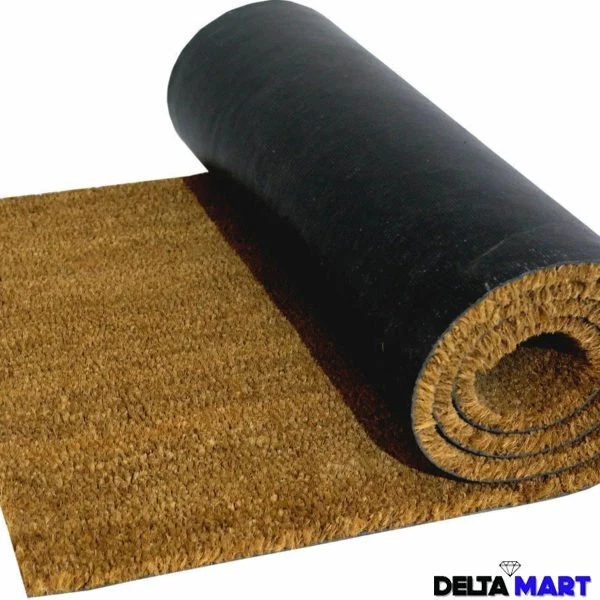
The British front door asks a mat to scrape mud, swallow rain and still look presentable for visitors. Households choosing coir door mats or rubber door mats are usually trying to do part of that job, but they do it in different ways. Choosing well is less about which material sounds more "traditional" and more about whether the mat will sit in open weather, in a porch, or just inside the hallway.
This is a homeowner's comparison for front and back doors. It is not a specification for a shop or school entrance.
What each material does well
Coir is the familiar fibrous mat. Its strength is scraping: grit, dry mud and leaves catch in the fibres instead of travelling straight onto the carpet. In a covered porch it can look smart and work hard. Its weakness is water. Coir holds moisture, can darken or shed, and deteriorates faster if it sits in standing rain or is never given a chance to dry.
Rubber is better at shedding water and at being washed. A textured or ribbed rubber surface wipes damp soles and can be taken outside and hosed. It usually lasts longer in wet UK weather and does not harbour quite the same musty smell if you let it dry. It may be less aggressive at scraping thick countryside mud than a deep coir pile.
Many households end up using both: a scraper outside or in the porch, and a wiping mat inside. That two-step idea matters more than declaring a single winner.
Outdoor step, porch or inner hallway
An open, unsheltered step is a harsh place for coir. Rain saturates it and frost does not help. A rubber mat that drains, or one with holes, is usually the more practical outdoor choice, provided it fits the tread and does not overhang. On a smooth wet step, an anti slip rubber mat intended for damp utility areas may be more suitable than a lightweight decorative mat, as long as it is securely placed and does not create a raised trip at the nosing.
A covered porch is where coir often earns its keep. It stays drier, scrapes well and can be shaken out. Even here, lift it after very wet spells so the floor beneath can dry.
Just inside the door, either material can work. Rubber is easier to mop if the household includes dogs, children and supermarket bags set down in a rush. Coir still scrapes, but fine grit will migrate through it onto timber or carpet if you never pick it up.
When you compare rubber door mats for the inner position, look at size first. An inner mat should cover two or three footsteps along the line people actually walk, not just fill the existing dent in the carpet.
Size, thickness and door swing
Measure the floor with the door fully open. A mat that fouls the door gets kicked into a heap. On a narrow Victorian hallway, a longer runner often beats a wide, short mat that nobody quite steps on.
Outside, keep the mat within the step or recessed well. A proud edge on a front step is a genuine trip hazard, especially for visitors who do not know it is there. In a recessed well, match the depth as closely as you can so the walking surface is flush with the surrounding floor.
Thickness should suit the job. A very thick mat inside can catch a walking frame or a buggy wheel. A very thin mat outside may float on a film of water. There is no single correct measurement; check the product and the place it will live.
Other ranges of coir door mats are useful when you want to see how different sizes and borders sit in a porch, but the siting rules stay the same.
A simple two-mat set-up
A reliable UK arrangement looks like this:
- A scraper at the threshold or in the porch — coir if it stays reasonably dry, rubber if it does not.
- A wiping mat immediately inside, long enough for a few steps.
- A habit of using both, including when you come in the back door with shopping or garden boots.
The back door often does more work than the front and gets less attention. If that opening sees muddy boots, consider a tougher surface and compare household mats with industrial rubber mats that can be hosed after a wet walk.
No arrangement removes the need to sweep. Leaves left on any mat become a slick layer, which helps nobody.
Care through wet weather
Shake or vacuum coir regularly so it does not become a packed block of grit. Let it dry thoroughly if it has been soaked; a radiator is usually too harsh, but a porch with airflow is ideal.
Rubber mats can be hosed and stood on edge to drain. Wipe the floor underneath. Grit trapped under either type of mat will scratch timber, stone and vinyl.
In icy weather, treat an outdoor mat as part of the step. It can offer more texture than bare smooth masonry, but ice on top of a mat is still ice. An anti slip mat is an aid to grip, not a promise that a frozen, leaf-covered step is safe.
Common mistakes
- Leaving a coir mat on an open step all winter and wondering why it collapsed
- Buying a pretty inner mat that is smaller than one adult footfall
- Using indoor textile mats outdoors
- Ignoring the back door, where most of the dirt actually enters
- Allowing a wrinkled or waterlogged mat to sit in place for weeks
Choose coir where you need scraping and can keep the mat reasonably dry. Choose rubber where water, washing and durability matter more. For many UK front doors, the best answer is not one material forever, but a scraper and a wiper working together.