

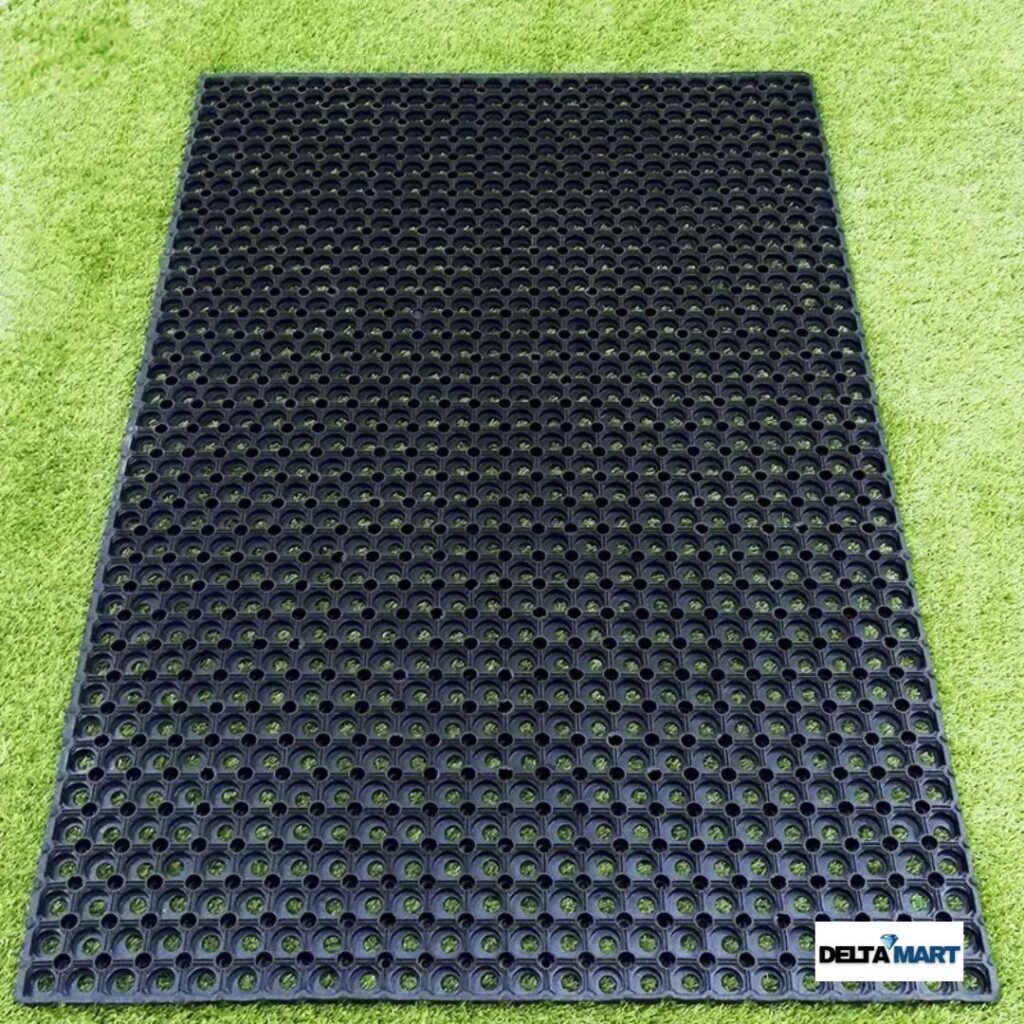
The extension is approved, the builders are booked and the skip is on its way. Then someone asks the awkward question: how are the barrows, the mini digger and the delivery van going to get to the back garden without wrecking the lawn? Ground protection mats are the answer on countless UK jobs, from small home projects to weekend festivals, and a little planning makes them far more effective.
Builders, landscapers, event organisers and homeowners all face the same basic challenge: temporary access over soft ground that needs to be usable again afterwards. Here is how to approach it.
When you need ground protection (and when boards are enough)
If the job is short, the weather is dry and the only traffic is a few people on foot, scaffold boards or plywood sheets may be enough. They are cheap and easy to find.
Boards struggle, though, when the ground is wet, the traffic is heavy or the job runs for weeks. They can crack, warp, slide and become slippery, and they offer little grip on a slope. Once you add wheelbarrows, dumper trucks, vans or crowds, purpose-made ground protection mats become the safer and more practical option. They spread the load, give better grip and are designed to be laid, lifted and reused many times.
A good rule is to ask what the worst day of the job will look like. If that day involves rain and heavy wheels, plan for proper protection from the start.
Rubber vs plastic ground protection mats
Both materials are widely used, and each has its strengths.
Rubber mats are heavy, which helps them stay in place without much fixing. They are quieter underfoot and under wheels, offer good grip and tend to sit snugly on uneven ground. A rubber floor mat outdoor is a good fit for pedestrian routes, garden paths and areas where people and light machinery share space.
Plastic mats are lighter and often larger, making them quicker to lay over long distances, and many are designed to carry heavier plant. They can be more slippery when wet or muddy and may need connectors to keep them together.
For routes that must handle constant heavy wheels, heavy duty rubber mats add strength at key points such as entrances and turning areas. Delta Rubber Imports also offers ground protection mats if you want to compare rubber options for a larger site.
Planning an access route for vans, plant and footfall
Walk the route before anything is laid. Note where vehicles will turn, where they will stop to unload and where the ground is softest. Turning points take the most punishment, so they usually need the strongest protection and the widest coverage.
Keep pedestrian and vehicle routes separate where you can. Mark the edges clearly and make sure the route is wide enough for the largest vehicle with a little room either side.
For events, think about the flow of people: entrances, exits, bar and food areas, and toilet blocks all attract heavy footfall. Covering those areas first gives the best return. Do not forget emergency access, which must stay clear and usable throughout.
Laying, joining and lifting mats
Lay mats on the cleanest, most level surface you can. Remove large stones and debris, and fill obvious holes so mats do not bridge them.
Start at the most important end of the route, usually the hard standing or entrance, and work outwards. Join mats securely so they act as a continuous surface. On slopes, lay them so the joins do not create a lip facing oncoming wheels.
When the job is done, lift the mats in the reverse order, starting at the far end. Brush or hose off mud before stacking. Heavy rubber mats are a two-person lift, so plan the work and the people accordingly.
Protecting lawns afterwards and reinstating grass
Even with mats, grass underneath will be stressed after several weeks without light. It will often look yellow and flattened when the mats come up. The good news is that grass is resilient, and with care it will usually recover.
Lift the mats as soon as the job allows. Rake the area lightly, water it in dry weather and avoid walking on it for a while. If there are bare patches, overseed them. Where the soil has been compacted, spiking with a garden fork helps air and water get back into the ground.
For areas where you want grass to keep growing while still being protected, grass protection mats let the turf come through the mat rather than smothering it. For short-term jobs, Delta Rubber Imports’ temporary grass protection mats are an alternative worth considering.
Storage and reuse between jobs
One of the biggest benefits of quality mats is that they can be used again and again. To get the most from them:
- Clean off mud and debris before storing
- Stack flat on a level surface, off bare soil if possible
- Store out of direct sunlight when not in use
- Check for damage before each job and set aside any split mats
- Keep a simple record of how many mats you own and where they are
Builders and event companies often find that a set of mats pays its way over several jobs. For heavier static loads, such as plant on standby, Delta Rubber Imports also supplies heavy duty rubber matting that may suit your kit.
Planning ahead with ground protection mats
Ground protection mats keep jobs moving and lawns intact when the weather turns. Choose rubber or plastic according to the traffic, plan the route carefully, lay and lift with care and give the grass some attention afterwards.
When you are planning your next project or event, browse the outdoor range at Delta Mart. Our mats are robust enough for repeated use, priced to suit trade and household budgets alike, and sent out quickly across the UK, which helps when a start date is fixed.