

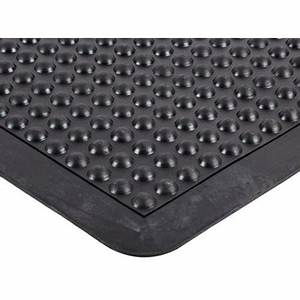
Many of the black mats used in home gyms, utility rooms and light commercial spaces are made with recycled rubber, often from end-of-life tyres that have been processed into a new sheet or tile. That is why recycled rubber mats are popular: they are tough, usefully heavy and give a second life to a material that already exists. They are not automatically "greener" in every respect than every alternative, and they are not the right surface for every room. The sensible way to buy them is to read the actual product specification and match it to the job.
This guide explains what to look for and where recycled rubber usually fits. It does not invent recycled-content percentages or environmental scores for any particular range.
What "recycled rubber" usually means
In household and light commercial matting, recycled rubber is commonly produced by breaking down used tyres and binding the resulting granules or buffings into tiles, rolls or mats. Some products also include a portion of other rubber or a wear layer. The exact mix varies, which is why two mats that look similar can smell, flex and mark differently.
What you should check on the product page or data sheet, rather than assume, includes:
- Whether the product is described as recycled, partly recycled or simply black rubber
- Intended use: gym, utility, outdoor, animal housing and so on
- Thickness and how the mat is meant to be laid
- Any notes about odour when new
- Cleaning guidance and chemical resistance
- Whether it is intended for interior use only
If those points are not clear, ask before you cover a whole room. Colour flecks, labels and marketing words are not a substitute for a stated intended use.
Other descriptions such as recycled rubber flooring refer to the same broad family of products. Compare like with like: a gym tile and a thin utility runner may both contain recycled rubber and still behave very differently.
Where recycled rubber mats work well
Home gyms and workout corners. Recycled rubber is widely used as rubber gym mats because it is durable, relatively heavy and kinder to the floor than bare weights. Density still matters; a soft, loosely bound tile is not the same as a firmer tile meant for heavier use.
Utility rooms and workshops. The weight helps mats stay put, and the surface copes with everyday knocks. Check guidance if you expect oil or strong chemicals.
Garages. Recycled rubber can make a cold slab more pleasant, provided the floor is dry enough to cover and the door still clears the extra thickness.
Paths and some outdoor uses. Only if the product is described as suitable outside. UV, frost and drainage are separate questions from recycled content.
Animal housing and play areas are specification-led. Do not assume a gym tile is automatically right for either job.
Smell, marking and indoor air
New recycled rubber can have a noticeable smell, especially when many tiles come out of one delivery. That usually fades with ventilation and time. Unpack mats, separate them and give them air before you close them into a bedroom or nursery. A mild wash and a full dry can help; strong solvents and heavy fragrances generally do not.
Some people are more sensitive than others. If anyone in the household reacts to strong odours, trial a small area first or choose a product with clearer interior-use notes.
Recycled rubber can occasionally leave a dark mark on a pale, porous stone or an unsealed surface, particularly when new or wet. If you are covering an expensive finish, test a spare tile and lift it after a few days.
Indoor gym mats should still be cleaned by the mild method: remove grit first, wash with a little suitable cleaner, and dry the floor beneath when you lift an island of tiles.
When another material may be better
A different surface may suit you better if:
- You need a very light mat that will be moved daily
- The room is a bedroom where even a temporary odour would be a problem
- You want a pale, decorative finish rather than a functional black or speckled floor
- The space is a wet room or wash-down area that needs a specified drainage mat
- You need independently assessed play or specialist safety surfacing
- The manufacturer of an appliance or machine says it should stand on a bare, solid floor
In workshops that see oils, check chemical suitability rather than assuming tyre-derived rubber will shrug off everything. For standing comfort at a till or bench, an anti-fatigue design may matter more than recycled content alone.
Ranges of rubber gym mats and industrial rubber mats are useful comparisons when you are deciding whether your project is really a gym floor, a utility floor or a workplace standing patch.
Buying without greenwash
Recycled content is one useful attribute, not a complete purchasing decision. A mat that fails quickly and goes to landfill is a poor piece of reuse, however it started life. Favour a product that fits the room, can be cleaned, and can be lifted and reused if you move.
Be wary of broad claims that a mat will "save the planet" or that every black mat contains the same amount of recycled material. If a figure is stated on the product you are buying, treat that figure as specific to that product.
Transport and packaging have an impact too. Ordering the right quantity the first time, with a sketched layout, avoids spare tiles sitting in a shed for years.
Common mistakes
- Choosing on recycled content alone and ignoring intended use
- Covering a whole spare room without airing the mats first
- Assuming outdoor suitability from colour alone
- Using gym tiles as play-area fall protection without proper assessment
- Never reading the cleaning notes, then using a harsh solvent
Recycled rubber mats are a practical, durable choice for many home gyms, utility rooms and similar spaces when the specification matches the job. Read what the particular product is made for, air new mats, protect sensitive floors with a trial piece if needed, and treat recycled content as one honest factor among several rather than as a magic label.